


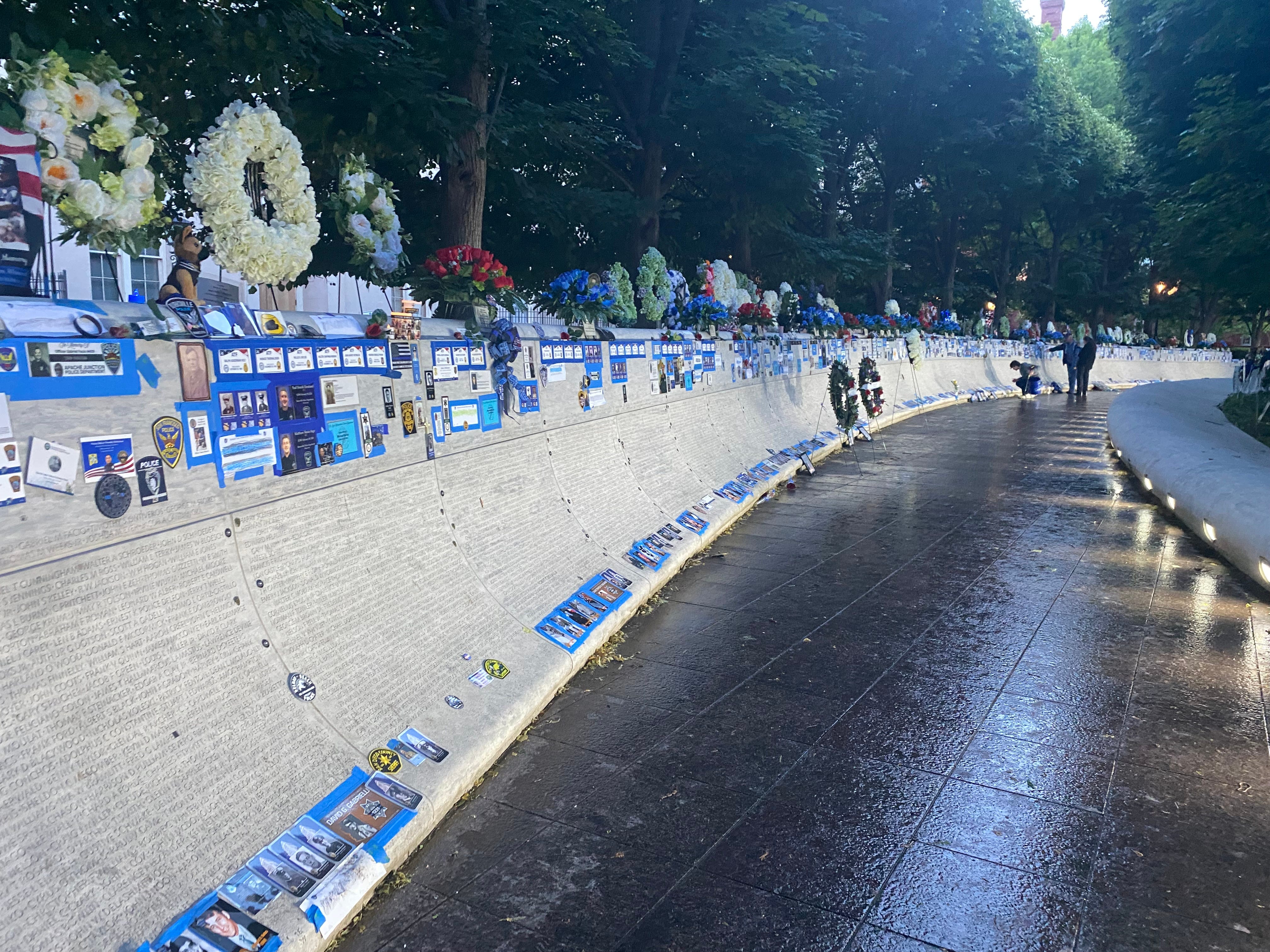
Friday was Peace Officers Memorial Day, a day of remembrance established by President Kennedy in 1962. I returned from Washington, D.C., Friday evening after spending the week serving as a citizen lobbyist with the Police Officers Defense Coalition during National Police Week. Even that day, we were able to hold an impromptu meeting with a staff member from Senator John Kennedy’s office in Louisiana.
National Police Week
Over those four days, we walked the halls of the congressional office buildings. We sat down with legislators and their staffs and advocated for legislation that matters. The work was deliberate and focused, and I believe it made a difference. We have reason to believe that it did.
The meetings were only part of the story. What I brought home with me most were the moments spent with the families of fallen officers. Hearing their stories and looking into their eyes gave this mission a weight that no briefing ever could. I met some of them on airport trams, on flights, at the memorial wall, and at evening receptions.
Lobbying for public safety is not a political exercise. Done for the right reasons, it is an act of accountability. It is the proper response to tragedy and a way to honor sacrifice with something more than silence.
The day before I arrived, the Medal of Sacrifice passed the Senate and now awaits the President’s signature. On Friday, the staff member I met with in Senator John Kennedy’s office told me that as many as five pro-police and pro-public safety bills have moved out of Senate committees and are ready for a floor vote. Anyone who understands how slowly Washington moves knows that this is major good news.
A Failed State
I stayed in Columbia Heights and had looked forward to the “vibrant” community my Airbnb host described. The Metro station was half a mile away, and the weather was crisp and perfect for a long walk in dress shoes and a suit. Despite the neighborhood’s reputation for walkability, it did not feel safe for a visitor on foot.
Even the convenience store reflected broader decline. It did not have refrigerated beer, chilled malt beverages, or wine. This was not because it was a classy store. It was completely sketchy.
Two Metropolitan Police Department cruisers sat in the Tiger Mart parking lot with their marker lights on. Meanwhile, groups of unsupervised children dominated the streets, many on app-based scooters and e-bikes moving unpredictably along the sidewalks. Pedestrians were equally chaotic, often blocking the way and intentionally bumping into people. The scene was disorderly beyond anything I expected. The smell of cannabis hung openly in the air.
Driving through MPD-patrolled neighborhoods, despite seeing a noticeable police presence, we did not witness active intervention even as we observed repeated public-order and quality-of-life offenses over the course of a five-mile drive. At other times, we saw armed National Guard units patrolling in teams of three. That response may be effective in the short term, but only temporarily. On my first beat, an area with generational poverty and a transient population dealing with behavioral health and substance abuse, people did not smoke cannabis openly in the streets even in the early morning hours. They still made the effort to conceal their crimes. That norm was gone here.
It is election season in the District of Columbia, and the political machines running Washington, D.C., are promising more of the same. The candidates continue to promote a philosophy centered on government assistance and tax-funded cradle-to-grave security.
The District of Columbia has been part of my life for longer than I can remember. I have lived in both Montgomery and Prince George’s counties, so returning has always felt like a homecoming. I missed the 1990s and the 2000s but lately, this region keeps calling me back, now year after year. Now, my investment in this city and what it represents is very different.
Some of What We Accomplished This Week
The Medal of Sacrifice has passed Congress and now awaits the President’s signature.
Five pro-law-enforcement bills moved out of Senate committee and are now ready for a floor vote.
Advocated pending bills with dozens of members of Congress and their staff.
On Friday, flags flew at half-staff across this nation in their honor. President Kennedy, as mentioned in the beginning of this article, established this day of remembrance in 1962, and more than six decades later, the debt we owe these men and women has only grown.
Earlier last week I stood at the National Law Enforcement Officers Memorial, a wall bearing the names of more than 22,000 officers killed in the line of duty. We add an average of 163 names every year.
Those of us who have built our lives around public safety carry a responsibility that does not end when we leave the job. Showing up in the halls of Congress, on behalf of those who can no longer speak for themselves, is not extraordinary.
For this profession, it is simply what we owe.
Rest easy, heroes. We will always remember you.
Please keep all families who lost a peace officer in your prayers.
Roland Clee served a major Florida police department as a Community Service Officer for more than 26 years. His career included uniformed patrol, training, media relations, intelligence, criminal investigations, and chief’s staff. He writes the American Peace Officer newsletter, speaks at public safety, recruiting and leadership conferences and helps local governments and public safety agencies through his business, CommandStaffConsulting.com.
His work is frequently featured on LawOfficer.com, the only law enforcement owned major media presence in the public safety realm.
For media interviews and podcast appearances, click here: http://bit.ly/40pT3NS
I want to publicly express tremendous gratitude to Paula Fitzsimmons, author of For the Blue Substack and Legislative Director of the National Police Association, and Bert Eyler, President of the Police Officers’ Defense Coalition. Last year we locked arms with Hollywood Morris of Support Our Shields and police mental fitness advocate Cori Huston and accomplished something that had not been done before. This year we added a day and our impact was even more effective and profound.
References:
National Police Association
https://nationalpolice.org/
Police Officers’ Defense Coalition
https://policeofficersdefensecoalition.com/
Support Our Shields
https://www.supportourshields.com/
Great work. Thank you!
GREAT JOB BROTHER!!!!
What A Week