


The Flat Tire
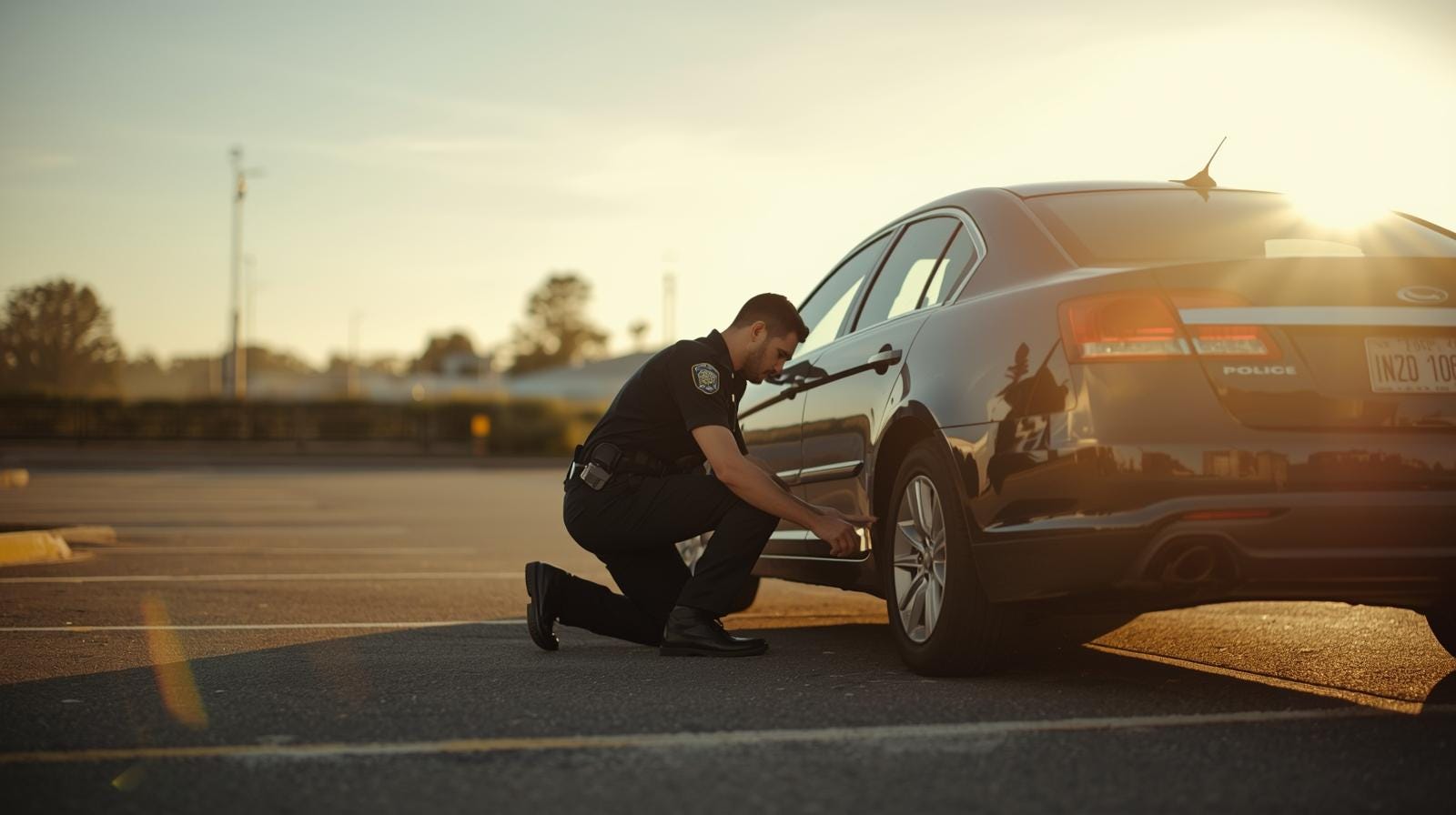
Three years ago, I saw a social media post by a law enforcement agency showing an officer changing a tire for a stranded motorist. The officer in the photo is a friend of mine for more than two decades, and knowing him well, I was not the least surprised by his kindness or initiative. But there were details in the post that made me think. The officer was on his lunch break at a training class in another county when he encountered the motorist with the flat tire in a parking lot. The parking lot was the police department he was visiting. Yet somehow the moment was photographed, sent to the public affairs office, packaged for social media, and distributed across multiple platforms.
After giving this perhaps too much thought, I was left with the same question: What does this have to do with law enforcement, and what does it do to enhance the image of the agency or the profession? My friend in the picture would have changed that tire whether anyone was watching or not. He would have done it in uniform, off duty, or wearing a fishing shirt on a Saturday morning. That is who he is. The act itself was genuine. The presentation of it felt less so.
Supporters of policing will praise these moments because they tend to celebrate almost everything officers do. Critics will dismiss them as public relations theater. Unfortunately, when a good deed is carefully staged for public consumption, it risks confirming the cynics more than persuading them. That is where the problem begins.
When Policing Becomes Performance
Around 2017 and 2018 many agencies began emphasizing a directive often described as “humanizing the badge.” The goal was understandable: show the public that police officers are not distant authority figures but fellow citizens who care about their communities.
Soon social media filled with photos of officers cooking breakfast during wellness checks, mowing lawns for elderly residents, washing dishes in family kitchens, and participating in various acts of goodwill. None of these actions are inherently wrong. In fact, nearly all officers have always done these things quietly for decades.
What changed was the need to document them.
The moment an officer pushes a lawn mower while another officer photographs the scene for social media, something subtle but important shifts. What was once a private act of kindness becomes public messaging. It becomes insincere and even exploitative.
At one point in my career, I was assigned to follow command staff to a homeless shelter to take photos of them reading to children. The activity itself was commendable. But the experience left me wondering whether the moment was about service, or about optics. Policing has never been a profession short on genuine compassion. I consider it a real danger comes when compassion begins to look scripted.
Coffee With a Cop
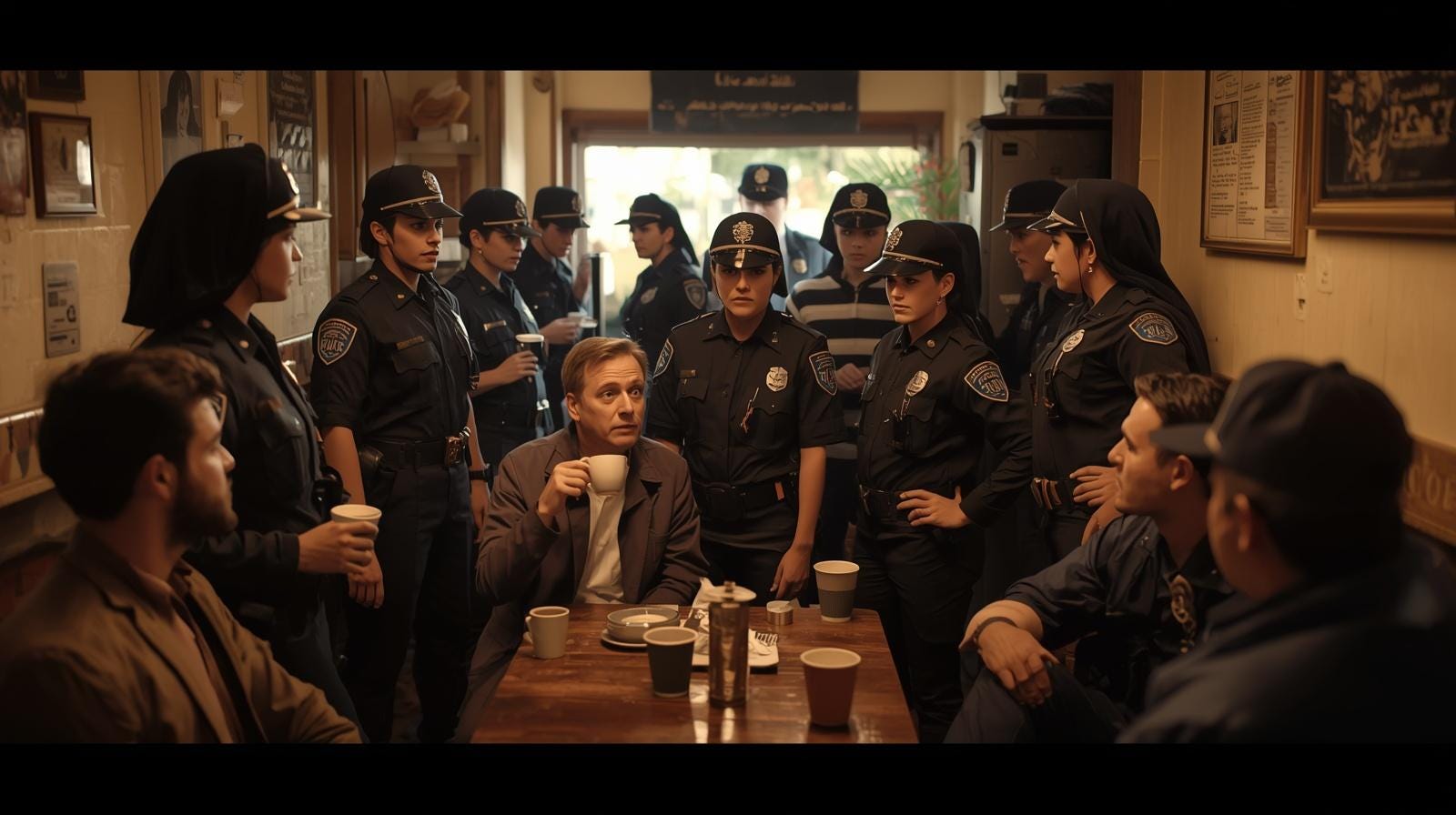
One of my last assignments involved organized community engagement in 2019 while working in the media relations office. One morning we held a “Coffee with a Cop” event at a small coffee shop. Before leaving headquarters, more than a dozen officers gathered for a briefing that ended with the commander’s enthusiastic directive: “Let’s go engage the community.” The irony was difficult to ignore.
Each of us arrived in our own unmarked city car, filling most of the nationally known coffee shop’s notoriously tiny parking lot. Inside, the limited seating was quickly occupied by uniformed officers. Citizens who had simply stopped in for coffee suddenly found themselves surrounded by police officers conducting an outreach event they had not planned to attend. We tried to make the best of it, talking with customers and posting photos to social media. The interaction often felt forced, and the smiles we captured for the camera did not always reflect genuine connection.
Programs like Coffee with a Cop were created with good intentions, and in some places they work well. But the lesson I took from that morning was simple: trust cannot be manufactured through scheduled engagement alone. When I dug into the roots of its origins, all the way back to Hawthorne, California, I found that most of the national sponsors were not pro-police, but painted the police as the problem.
That does not mean community engagement is meaningless. It grows through daily encounters that are neither staged nor scripted.

The Professional Presence
Decades earlier I witnessed a moment that demonstrated this principle far better than any outreach program. I had located a hit-and-run driver and called for backup. The officer who responded was one of the most respected in our department. His uniform was immaculate, his tactics were flawless, and his demeanor reflected quiet confidence. When the driver began giving me attitude, the officer calmly walked over and said, “I don’t know what you think is funny here, but this isn’t a joke.” He never raised his voice. He never mentioned arrest or jail. The driver’s entire posture changed.
Professionalism alone commanded respect. Citizens recognize authenticity quickly. So do criminals. Moments like that build trust in ways that no social media campaign ever could.
The “Piggy Bank” Theory of Trust
Several years ago I discussed these issues with chiefs, academy directors, and senior law enforcement leaders. They described community trust as an investment—coins deposited into a piggy bank over time. One day, they explained, an officer might face a tragic encounter involving deadly force. When that moment comes, the accumulated trust will allow the department to make a withdrawal from the bank of public goodwill. It is an appealing theory.
But the events of recent years, and even in 2026, tested that theory in ways few expected. Across the country, officers found themselves facing hostile crowds, violent protests, and an intense national debate about policing. In some cities, officers were struck with rocks, frozen water bottles, and broken pavement. Leaders struggled to balance political pressure with the morale of the officers standing the line. The lesson is sobering.
Public trust can never be stored away like savings in an account. It is not a deposit that grows in value like accumulated interest.
We need to answer calls again
The same public that you are engaging in community events, bringing out your field kitchen, or following you on your social channels are getting the message that law enforcement has the time for cookouts or ice cream trucks, but then they are directed to a clunky failing online reporting system when something vitally important to them is disregarded by cops as inconsequential. What do you think that taxpayer thinks of your officer or deputy’s Tahoe or F150?
A question for the ‘old school’ officers who responded to stolen toaster or lawn mower calls: did you get a ton of field intelligence about the neighborhood from nosy neighbors?
The best thing that the police can do for community engagement is policing professionally.
Please keep all peace officers in your prayers.
Roland Clee served a major Florida police department as a Community Service Officer for more than 26 years. His career included uniformed patrol, training, media relations, intelligence, criminal investigations, and chief’s staff. He writes the American Peace Officer newsletter, speaks at public safety, recruiting and leadership conferences and helps local governments and public safety agencies through his business, CommandStaffConsulting.com.
His work is frequently featured on LawOfficer.com, the only law enforcement owned major media presence in the public safety realm.
For media interviews and podcast appearances, click here: http://bit.ly/40pT3NS
Roland this is a very important piece. Humanizing the police — in the face of a vicious media portrayal — is not a bad idea. But trivializing the badge, instead of teaching people to respect it, is not helpful. Bravo to you fo threading that needle with compassion.
Thank you for your service blessings and prayers David Russell, Naval aviation