


This past year was filled with unforgettable stories. It began January 1, 2025, with the New Orleans terrorist attack that was followed hours later with the Tesla car bomb in Las Vegas.
Protesters continued to fill the streets of New York City, crippling traffic in opposition to the Israeli military response to the Hamas massacre and kidnappings of October 7, 2023.
In June, Vance Boelter murdered former Minnesota House Speaker Melissa Horton and her husband Mark. Immediately prior to this, Boelter shot and gravely wounded another lawmaker and his wife. Following the largest manhunt in Minnesota history, the assassin was captured. A search of his vehicle revealed a letter where he implicated the governor. This was completely dismissed by the mainstream media prior to examination of the actual note based on anonymous sources close to the investigation.
This article is about the law enforcement and public safety stories that didn’t get the attention they deserved.
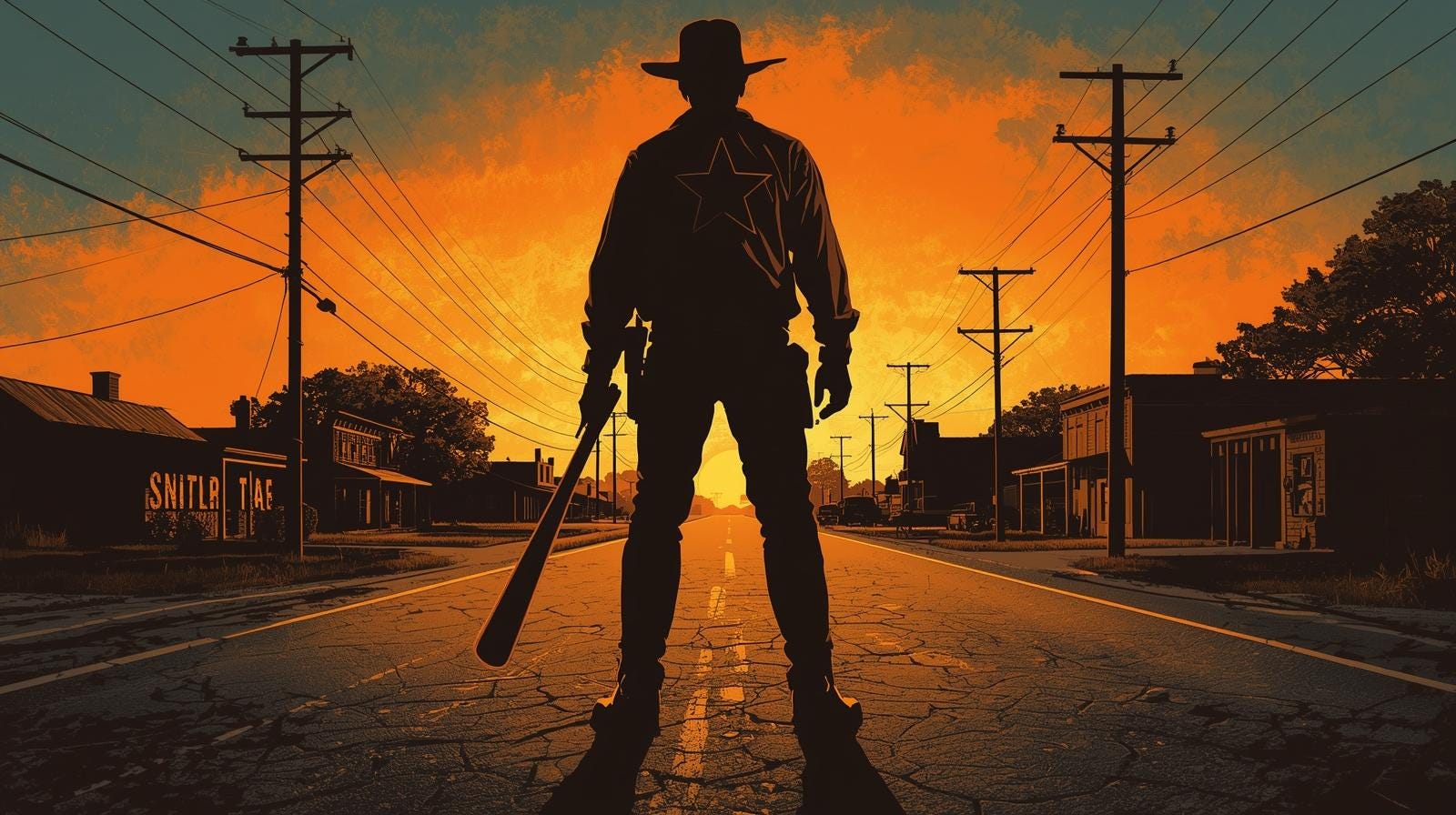
The Walking Tall Sheriff
Former Tennessee Sheriff Buford Pusser was investigated by the Tennessee Bureau of Investigation following a cold case investigation into his wife’s murder in 1967. This incident was a key component of the legend of Sheriff Pusser that painted him as an anti-crime crusader whose wife was murdered as they were ambushed by criminals. Following that, in the 1970s, there were several Walking Tall films made portraying him as a virtuous hero. In the 2000s, both Dwayne Johnson and Kevin Sorbo played Walking Tall characters, though their character went by different names. Pusser died in a single vehicle accident in his new Corvette in 1974, reinforcing the perception of heroism and unjust tragedy.
In August 2025, the brave investigators fundamentally upended the legend of the lawman immortalized in the Walking Tall films, concluding that evidence now contradicts his account of the 1967 killing of his wife, Pauline. Their thoroughness, including a 2024 exhumation, determined that Pauline was likely shot outside the vehicle and that Pusser’s own gunshot wound was inconsistent with an ambush. Prosecutors stated publicly that, if Pusser were alive today, there would be probable cause to charge him in her murder.
This was a prime example of transparency, commitment, and integrity. Consider the dedication required to solve a 58-year-old murder and implicate a deceased law enforcement officer more than five decades after his death, despite his legendary reputation. Law enforcement professional organizations and associations should be shouting from the rooftops about this, at least as loudly as they were while condemning an officer in Minneapolis in 2020.
Gen Z uprisings
Major Gen Z uprisings this year resulted in the overthrow of the government of Nepal and Madagascar. There were two major uprisings in South America and two others in continental Africa that have had impact but not regime change.
Beginning in 2023 and intensifying through 2024–2025, Gen Z–led Nepalis have mobilized in response to chronic unemployment, entrenched corruption, and a political system dominated by the same elite actors who have recycled power since the end of the civil war. These protests have been largely decentralized, digitally organized, and ‘leaderless,’ relying on social media rather than political parties or revolutionary movements. Demonstrations included mass student walkouts, road blockades, and protests targeting parliament and key ministries, with demands focused on accountability, resignations, and systemic reform rather than ideological revolution.
Then they set all three branches of government on fire.
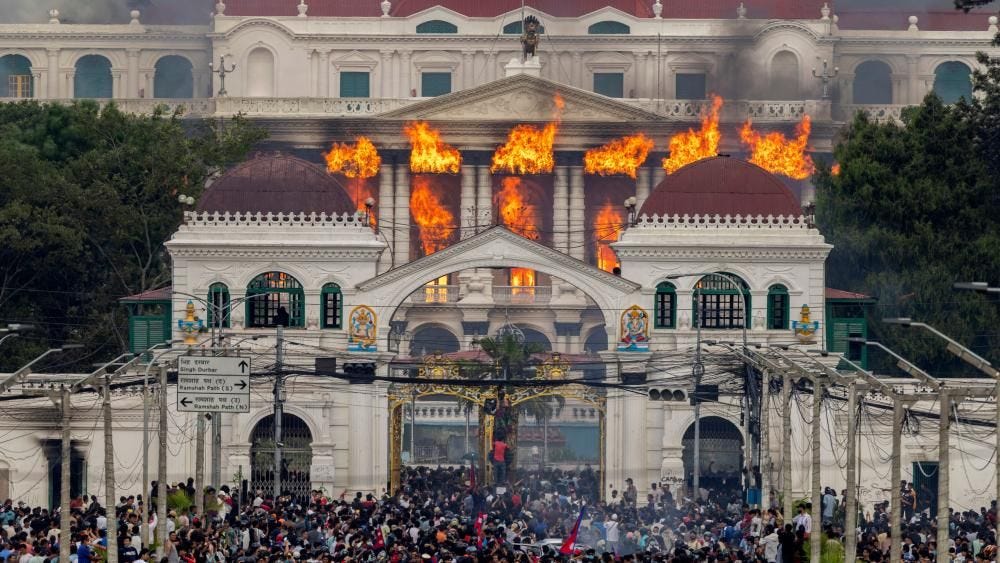
Following that, the military demanded the protesters choose a new Prime Minister which they did on Discord. Sushila Karki, a former Supreme Court justice was elected on a preference poll on Discord, ironically, one of the platforms that was banned by the previous government sparking the protests.
In October 2025, Madagascar underwent a military takeover following weeks of large anti-government protests sparked by water and electricity shortages and discontent with President Andry Rajoelina. Youth-led protests, in a country with a median age of 19 and with 60% of the population under 25, mobilized under a movement often referred to as Gen Z Madagascar.
Demonstrations erupted on September 25 over the chronic cutoffs of utilities and quickly expanded into broader political grievances. Government forces responded with force, and at least 22 protesters were reportedly killed in clashes galvanizing the movement.
A key military unit, CAPSAT, refused orders to suppress demonstrators, refusing to fire on civilians and instead sided with them, marking the turning point that led to the removal of Rajoelina from power. That development turned a youth driven protest into a military coup. The leader of the CAPSAT unit, Col. Michael Randrianirina, was later sworn in as interim president, with the military establishing a transitional governing council.
Why are an island nation off the east coast of Africa and a landlocked nation between India and China relevant? It should be concerning that these movements were a part of a larger uprising that is not highlighted in American mainstream media. We must recognize that it is occurring here in the United States. Do you really think that the mass protests for Gaza, ultimately in support of Hamas and opposed to the State of Israel, have any knowledge-based loyalty to either side? We haven’t seen any evidence of that, and YouTube citizen journalist Nick Shirley was interviewing Gen-Z protesters in New York City nearly two years ago and couldn’t find a protester who knew what they were protesting. These demonstrations were a public safety nightmare that crippled traffic to the bridges and tunnels in Manhattan.
From 1966 to 1976, Mao’s Red Guard in the People’s Republic of China were a youth movement operationalized to move the cultural revolution forward. They completely destabilized China causing them to be disbanded, with millions of members either re-educated or otherwise eliminated. We deserve better information on these trends reshaping the world.
Conversations about cannabis: The danger of weed has gone mainstream
On August 13, SNL comic Pete Davidson appeared on the Power 105.1 Breakfast Club. Formerly famous for embracing and promoting cannabis consumption, the sober Davidson is far more engaging. Around 40 minutes into the show, he discusses both his weed use and his experience in rehab. He says that “most of the young people (in drug rehab with him) were in there for weed.” The conversation with the hosts of the show revealed their intimate knowledge of contemporary cannabis consumption culture, including how to portion down. Davidson quotes stand-up comedian Dusty Slay who describes today’s high THC weed as stronger than ‘weaker acid.’ Slay talks about walking around in the front yard praying and reaffirming that marijuana has never killed anyone. Davidson then discusses how low THC weed was fun for music and movies, but today’s concentration causes him psychosis and feeling like he is ‘outside himself.’
What has come about in 2025, with the narrow defeat of recreational cannabis initiatives in several states, is a true reckoning of the true human and family cost of all forms of substance abuse. Families who fought against lethal drugs in honor of their lost loved one are now locking arms with former users who pull back the veil on the elevated risks associated with drugs and derivatives. Well known celebrity doctors including Dr. Phil McGraw and Dr. Drew Pinsky have brought opposing views to recreational marijuana, not from ideology, but from their experience.
A culture that spent a decade normalizing drug use is now recognizing its quiet casualties in rehab rooms and ERs instead of headlines. It is being revealed to compassionate voters that legalization efforts only exist to enhance corporate bottom lines and escalate black markets.
Law enforcement professionals, policymakers, and the public deserve honest coverage of forces reshaping authority, legitimacy, and social order in real time. Ignoring them doesn’t make them disappear. The law enforcement community must recognize in 2026 the importance of sharing these events, especially our victories. It guarantees that we will be leading when the consequences of these movements arrive.
Please keep all our first responders and their families in your prayers. Happy New Year.
Roland Clee served a major Florida police department as a Community Service Officer for more than 26 years. His career included uniformed patrol, training, media relations, intelligence, criminal investigations, and chief’s staff. He writes the American Peace Officer newsletter, speaks at public safety, recruiting and leadership conferences and helps local governments and public safety agencies through his business, CommandStaffConsulting.com.
For media interviews and podcast appearances, click here: http://bit.ly/40pT3NS
References:
Interesting piece about Buford Pusser. Just goes to show that the arm of law enforcement and justice actually reaches beyond the grave. The authorities could have just let it go but their integrity and transparency wouldn’t let them. Integrity must always precede reputation.
Great reminder of all the challenges ahead. One thing to remember: Melissa Hortman was assassinated one day after becoming the only Dem in the state legislature to vote to repeal eligibility for illegals to MinnesotaCare. See Somali fraud scandal. See assassin’s claim that Walz hired him. Expect this story to grow in 2026