


The Law Enforcement “Family”
A desirable feature of joining law enforcement, corrections, or a fire-rescue agency is the idea that you are now grafted into a great big loving and competitive family. It is one of the attractions that used to draw people to law enforcement, to be able to say that we are all family and that we are all connected to one another in this pond of sacrifice, sweat, and blood.
To those, excluding military service members, who have not been through actual academy training, and to family members who think that you have vicariously experienced it, you may have experienced a good taste, but nothing compares to the actual complete experience. There are significant goals in academy training that are exclusively based on trust between first responders, trust within the unit, and trust in the organization you work for.
These are your trust and truth until you get hurt.
The Moment an Officer Gets Injured
In patrol, I had many sworn officers as light-duty ride-alongs. It was important that they reached pensionable hours per pay period as they navigated the workman’s comp regime. When I was transferred to investigations, I received a larger cubicle with room for a second officer and an intern. During that season, I spent significant time with many sworn officers who had experienced both physical and moral injury. Many of my readers know the pain firsthand of deadly force exerted on you and responding with deadly force to end the threat. You were there and you understand the complicated nature of dealing with both sides of it.
A first responder never feels more isolated and alone than when they are injured, doing the job asked of them.
“My squad members don’t reach out to me anymore,” shared one injured officer who was spending 40 hours in the headquarters building absent doctors or PT appointments. I spent decades with them. Too many of their careers ended prematurely.
The Athlete Recovery Model
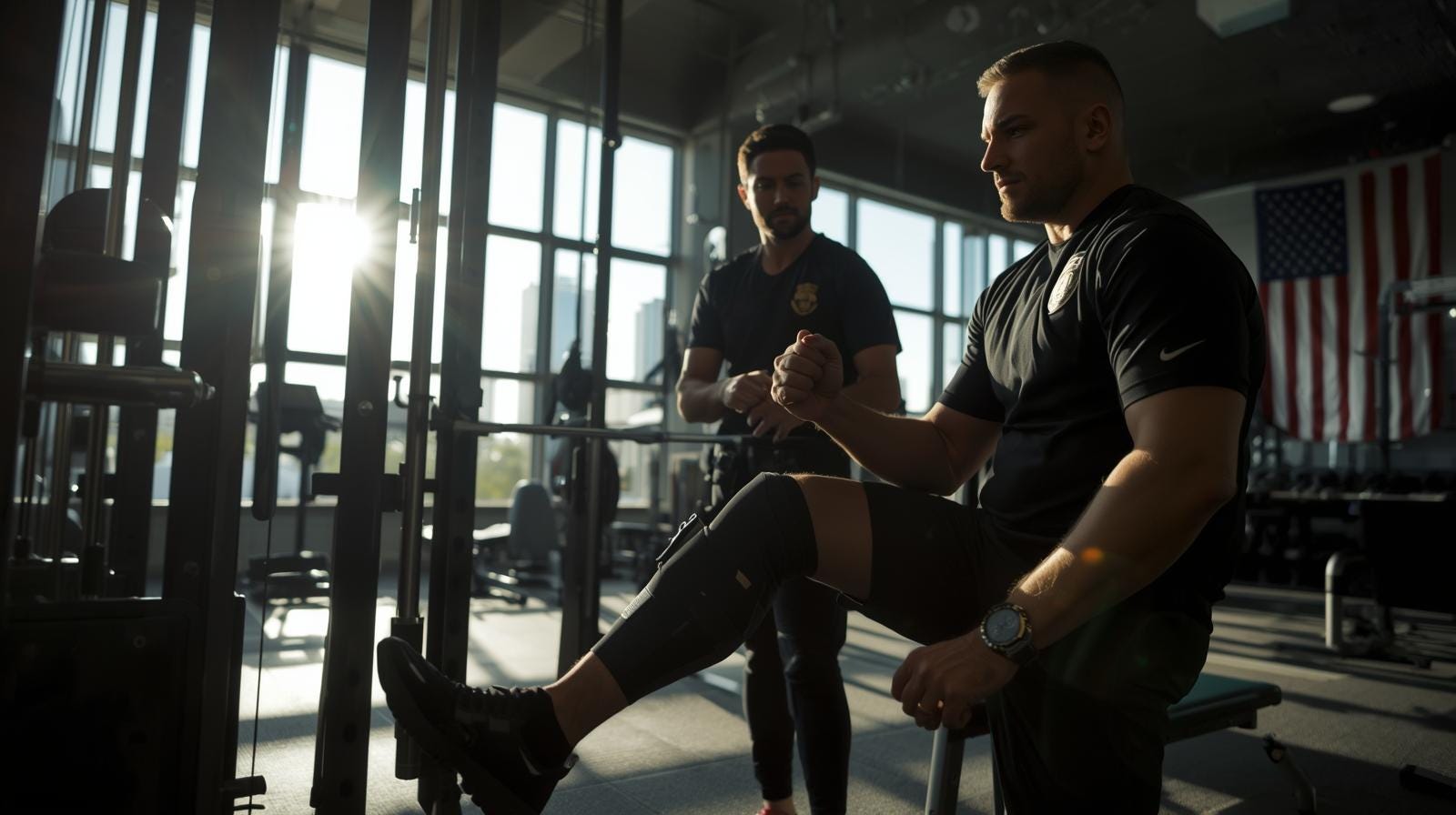
That’s why I am honored to share the innovative program Ready Rebound. What if we took the best practices and attitudes of high-performance sports medicine and rehabilitation to first responder injuries? The real newsmaker is that we haven’t had an innovation like this sooner.
While civil servants in fiscal management or neighborhood relations face physical risks, their daily hazards differ fundamentally from those of rescuers, corrections officers, and law enforcement. We currently operate within a system that treats carpal tunnel syndrome as administratively equivalent to the ‘on-the-job’ traumas of the front line: a gunshot wound in policing, musculoskeletal damage from a firefighter pulling down a burning ceiling, or facial trauma from an assault in a correctional facility.
The sports model is radically different: When a professional athlete is injured, the world stops. Trainers rush onto the field, a team physician conducts an immediate assessment, and within hours the athlete may have imaging, treatment plans, and rehabilitation specialists assigned. Every step is designed to restore strength, mobility, and confidence so the athlete can return to peak performance.
A fireman’s surgery may be weeks away. The decision to send a corrections officer to physical therapy may take more than a month. The law enforcement officer may be waiting for treatment while the cloud of an internal affairs investigation hovers over her or his family.
One of the hardest duties of any police chief is to tell an officer that because they haven’t been able to return to full duty within a policy time limit, they will be terminated. No one has offered a fix to that until recently, when I heard my friend Todd’s presentation to the police chiefs association meeting.

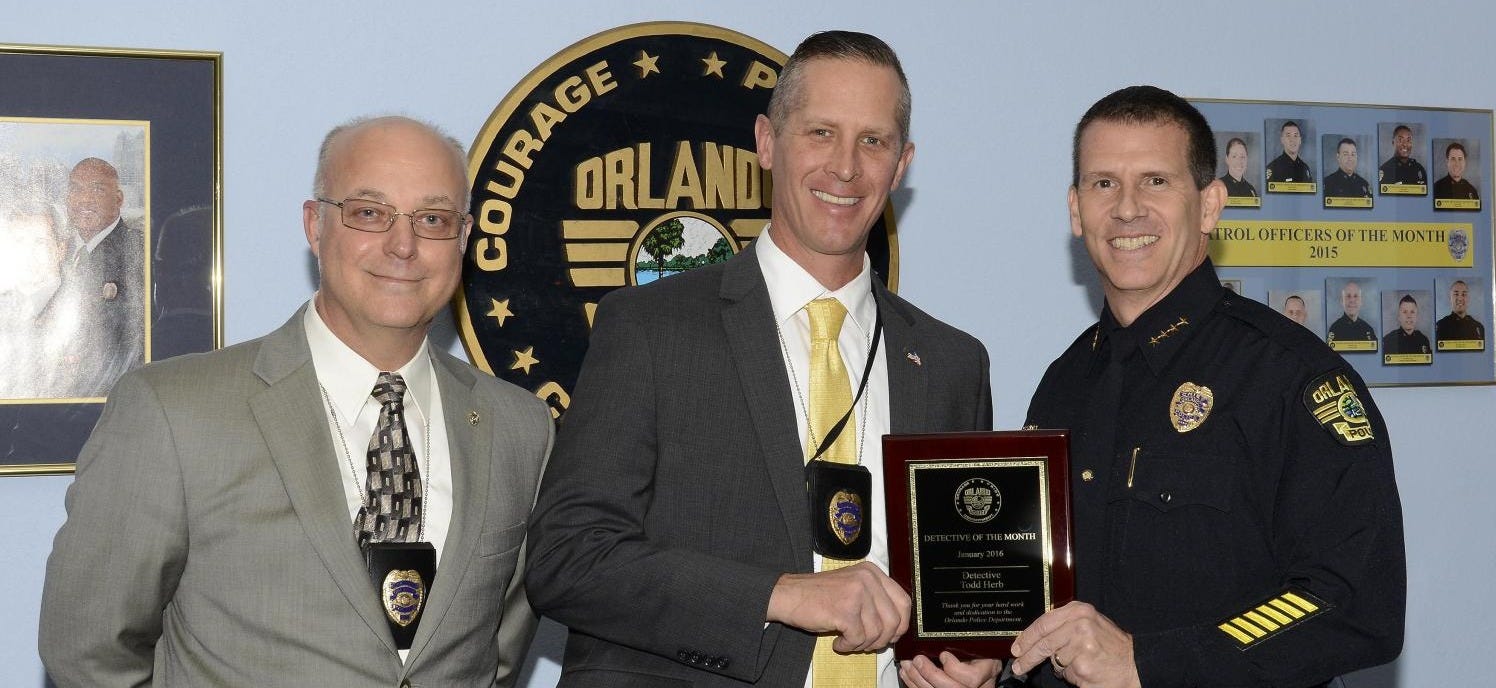
Todd Herb and I worked together for 23 years. He came from a smaller agency and hit the streets running in the most target rich environments in patrol, to the jump-out uniformed drug unit, to apprehension K-9, and finally solving the most intellectually challenging complex cases in our financial crimes unit. Even in our highly charged and competitive environment, I can’t recall a single negative comment shared about him and all his peers gave him a five-star rating. Today, after several years of representing valuable tools of the trade, he brings Ready Rebound to the forefront.
Getting Officers Back on the Street Safely
It is a 180-degree course correction for everyone with a high-risk pension, like police, corrections and fire. This solves the problem of every city, state, or county that doesn’t want to terminate the law enforcement or fire service professional based on arbitrary time limits on injury, repair and healing.
It breaks a system that deserves to be broken. This is not a wellness issue but a leadership issue. Is this the most important issue in law enforcement of this age? Likely in the top three.
Recent data confirms what everyone in uniform already knows. According to the FBI’s Law Enforcement Officers Killed and Assaulted report, assaults on officers have reached a ten-year high, with more than 85,000 officers attacked in a single year. The rate of assaults has climbed for three consecutive years, even while other categories of violent crime have declined nationally.
In practical terms, that means the risk to the officer answering the radio call is increasing, not decreasing. In early 2024 reporting, unprovoked attacks on officers rose dramatically, underscoring a troubling shift toward targeted violence against those who wear the badge.
Those numbers are not just statistics. Every assault on an officer carries the potential for a life-altering injury, both physical and psychological. A broken wrist during a struggle, a rolled ankle during a foot pursuit, or the long rehabilitation after being beaten in the line of duty is not an abstract policy matter. I’ve been in the hospital rooms with officers who nearly lost their life, and but for backup showing up in time, they would be engraved on the memorial wall. If you’ve ever been there, you know how off-putting, impactful and necessary that can be. We hope we never have to do it again. To be blunt, officers like that don’t need six weeks or six months to endlessly ruminate on what nearly happened. Sometimes we lose those officers to other careers and other times we lose them tragically.
Too often the systems responsible for protecting these professionals treat recovery as a bureaucratic timeline rather than a mission.
The Leadership Decision Agencies Must Make
I’ll admit that chiefs and sheriffs are easy targets. It is tempting to feel sympathy for them, caught between political pressure from above and expectations from the rank and file below. But on this issue, that excuse does not hold. Not here. This is precisely where leadership is teste and where too many fail.
Every chief and sheriff who rose through the ranks remembers what it felt like to stand in that space between pressure from the top and pressure from the street. Some of them reminded us at every rank stratum, that wherever they were, sergeant, lieutenant, captain, that they were the one bearing the tension for the whole organization.
Today, on an issue as fundamental as how we care for injured first responders, we are hearing too many supposed leaders retreat behind the language of scarcity, blaming and lamenting budget uncertainty and citing possible tax reductions that have not even been proposed, let alone enacted.
It is certain that leadership is not proven when conditions are comfortable. Leadership is proven when the system itself needs to be challenged.
When the people who run toward danger for their communities are the ones left navigating a bureaucratic maze after being injured in the line of duty, silence from leadership is not neutrality, it is failure.
When assaults are increasing and the risks of the profession are rising, leadership must ask a fundamental question: are we building systems designed to return our people to service, or systems that quietly push them out when the healing takes longer than a policy manual allows? Generation Z, and the now rising Gen Alpha, as their social norm will not tolerate any sense of disloyalty to them, even as their loyalty is blatantly conditional. Broadly, their perception is that every agency, business, or organization, exists for them, to give them a means of earning an income, to keep their promise of care, and if there is a generous wellness, healthcare, and disability program, the rising generation treats any failure as a systemic betrayal. This must be a consideration in retaining the generation that we will be handing the keys over to shortly. This hastens the need to fix this now.
I have no financial relationship with Ready Rebound today. I’m not opposed to it in the future, but it must be noted that this is not paid or sponsored by Ready Rebound. I saw my friend Todd Herb doing the right thing for the right reasons. If you’ve read previous articles, you likely know that the only promise I shared with victim’s families was ‘to figure out the right thing to do is, and whatever it is, do it.’ I encourage you to do the same!
Please keep all first responders in your prayers!
Roland Clee served a major Florida police department as a Community Service Officer for more than 26 years. His career included uniformed patrol, training, media relations, intelligence, criminal investigations, and chief’s staff. He writes the American Peace Officer newsletter, speaks at public safety, recruiting and leadership conferences and helps local governments and public safety agencies through his business, CommandStaffConsulting.com.
His work is frequently featured on LawOfficer.com, the only law enforcement owned major media presence in the public safety realm.
For media interviews and podcast appearances, click here: http://bit.ly/40pT3NS
Reach out to Todd Herb via email at therb@readyrebound.com
Only a true professional like Roland Clee could have written such a pure call for compassion on behalf of the fallen officer. Roland we are lucky to have you.
Pre-Hab + Re-Hab = Sustained Performance. It begins, or at least it should, on Day1. Ready Rebound, PreTeam Tactical, and others are making this philosophy and approach practical and reasonable. While I know you and I are closely aligned in this effort, your point should resonate soundly with leadership across the country. This level of service and type of care is no onger "optional." It is a leadership expectation and should be non-negotiable.
Great piece! Thanks for banging the drum!