


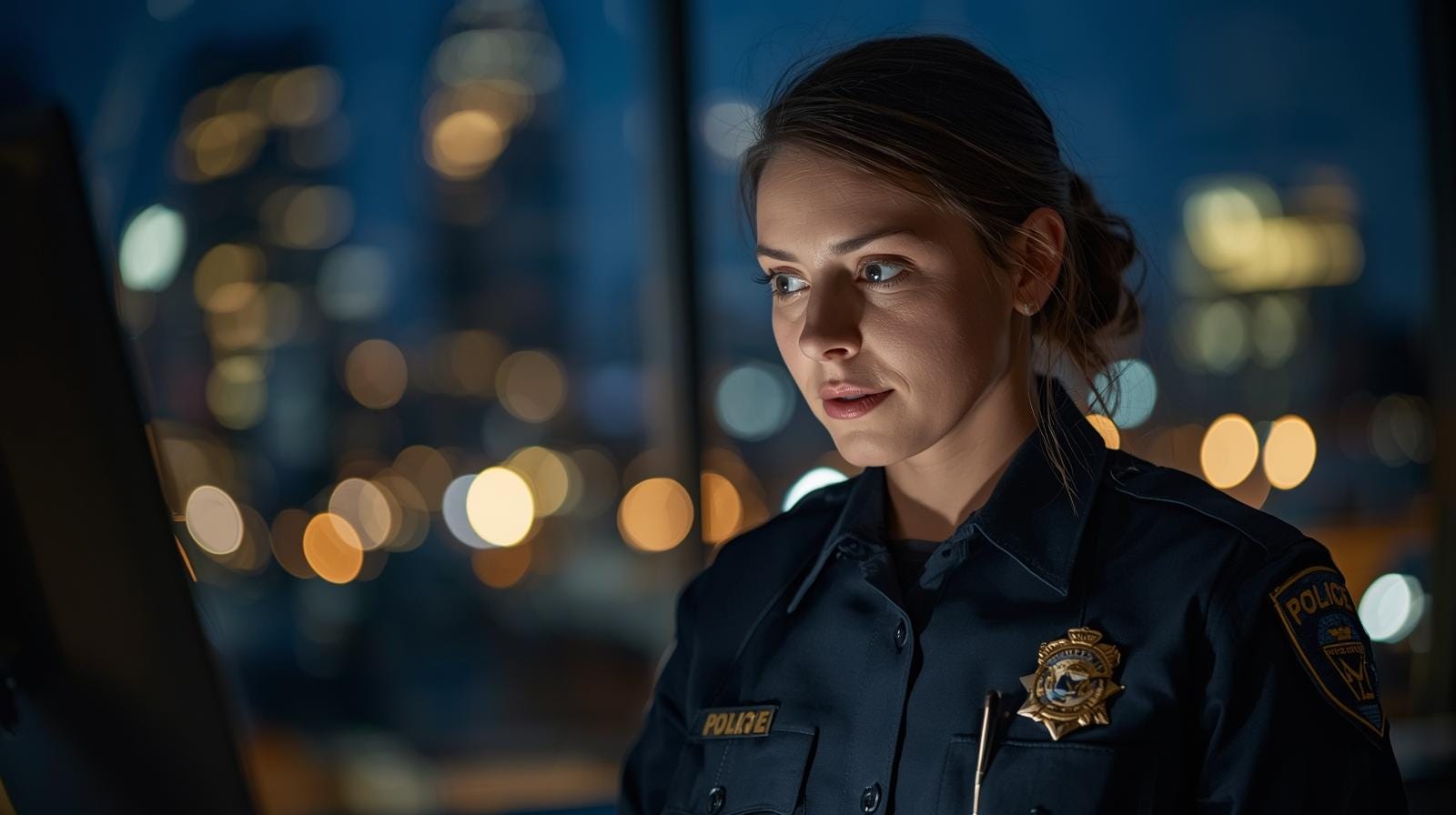
On Saturday, January 24, 2026, a disappearance case I worked on had the solemn anniversary of 20 years unsolved. The cold case has been adopted by the Florida Department of Law Enforcement (FDLE.) I reserve all details of the case for and to FDLE. It is a case that has been debated on true-crime podcasts as well as national programs like 60 Minutes and Dateline over the years. There were three other cases I worked with similar scale and scope, two were also disappearances and other was a terrorist massacre, but none of those taught the lessons that served me during the final years of my career and even while dealing with personal loss.
Pandemic and Stimulus Checks
About 15 months prior to retirement, I was assigned to investigate missing persons. Departing chief’s staff, the chief really took good care of me. The most uncomfortable part of the job was speaking regularly to the families. To succeed, I determined to turn that into my favorite and most effective part of my job. During the advent of the 2020 coronavirus panic, circumstances aligned to provide me with more than plenty of opportunities to regularly speak to families.
Every person in my jurisdiction with behavioral health issues compounded by substance abuse problems received a generous stimulus check, and every one of them was off like a dirty shirt on laundry day.
Policy required a DNA submittal within 30 days and a written supplement every 90 days. I found that many of the reporters or complainants also suffered from behavioral health issues yet were very responsive to firm compassion. Even families who had loved ones that had been lost in my city for years, just needed the assurance that someone still cared.
This only worked with certain rules. I had seen in past cases where impossible promises only harmed the relationship between the police and the family. It’s a fool’s errand to try to keep them on board while they are still dealing with immense uncertainty and loss. Truth trumps false promises, even well meaning false promises.
Instead provide milestone commitments that you can keep:
1. Never promise or guarantee any outcome
2. Don’t answer every question (this is very hard but worth it)
3. Promise that we’re going to determine the right thing, and whatever it is, we are then going to do it
(One of my friends on Substack regularly runs financial survival appeals and I can relate. The early promise was for every five free subscribers, you would likely have one paid subscriber. Like him, I will rarely paywall a post or restrict the flow of information.
I ask you today to financially support American Peace Officer. Join me in this adventure as we meet with legislators on both sides of the aisle, we focus on the best help for first responders and their families.
I’m as retired as I’m going to be for the rest of my life - 50 hours to 60 - and I will, whether you make a modest payment or not, going to continue to fight for the health, prosperity -physical and especially spiritual- of our nation’s first responders until my last day. I pray you join me in that. )
New Centurions
Today, a next generation of cold case detectives has borne the mantle, and I am inspired by where they are going. Post retirement, I was honored to be welcomed as a board member of my local crime stoppers program, Crime Stoppers of Northeast Florida,
Decades ago, Crime Stopper programs were just tiplines but today have evolved into legitimate crimefighting investigative tools. Today, the most progressive crime stopper programs are being invited to regional task forces, including cold case events. The new guard is also doing an outstanding job approaching cases that were unsolvable two decades ago and now Millennial and Gen Z detectives are bringing today’s technology in policing and solving a lot of yesterday’s crimes.
“He’s Wearing his Daddy’s Genes”
One of the technologies that today’s cold case detectives are using is genetic genealogy. Two detectives, who I admire greatly, Michael Moreshi and Michael Fields, adopted the 2001 Christine Franke murder. This case had all of the solvability factors and convicting that all our solved 2001 cases did not. It only lacked a suspect and these forensic DNA pioneers, through a grueling process convincing administrators of the value of expensive testing and extensive travel, 17 years later brought justice to the family.
The two Michaels and I worked directly in the past with the detectives and the prosecutors who brought the first successful DNA conviction in the United States: the Malibu rapist. “He’s wearing his daddy’s genes” was the British article about DNA read by prosecutor Jeff Ashton taking this technology to criminal prosecution.
On Feb. 21, 1987, a man terrorizing women in Orange County, Florida, brutally attacked Karen Munroe in her Orlando home while her two young daughters slept in a nearby bedroom, WESH reported.
It is amazing to contemplate that DNA evidence has been around less than 40 years. In this 2001 case, the DNA tools used for prosecution had existed for only 14 years at the time of the crime—a shorter span than the many years the case sat cold before its successful resolution.
The cops who care
All cold case detectives out there deserve an unofficial holiday! I don’t know when we should do it but there needs to be a real holiday in a forest of fake holidays. Let January 26, 2026 be a day where everyone in law enforcement reaches out to the amazing relentless, caring, and compassionate detectives who have the most challenging cases on their desks and keep going because there is, somewhere out there, a family at a loss needing closure.
If you are there today, mourning a loss of an unsolved murder or disappearance, my heart goes out to you. One of my friends was murdered and the case is still unsolved. Reach out to the leaders and commanders and let them know how much their commitment supporting cold case detectives means to you and your family. We are continually seeing those unsolvable cases being solved through innovation and technology and exclusively by the cops who care.
Please keep all peace officers in your prayers.
Roland Clee served a major Florida police department as a Community Service Officer for more than 26 years. His career included uniformed patrol, training, media relations, intelligence, criminal investigations, and chief’s staff. He writes the American Peace Officer newsletter, speaks at public safety, recruiting and leadership conferences and helps local governments and public safety agencies through his business, CommandStaffConsulting.com.
His work is frequently featured on LawOfficer.com, the only law enforcement owned major media presence in the public safety realm.
For media interviews and podcast appearances, click here: http://bit.ly/40pT3NS
References:
https://www.wesh.com/article/florida-dna-science-andrews-case/41877068
https://www.northeastflorida.crimestoppersweb.com/sitemenu.aspx?ID=231&P=about&utm_source
https://www.wesh.com/article/florida-dna-science-andrews-case/41877068
What a great article and reminder, my friend!